AgriLife shares recent research confirms link between heat and mealybug feeding and pasture damage
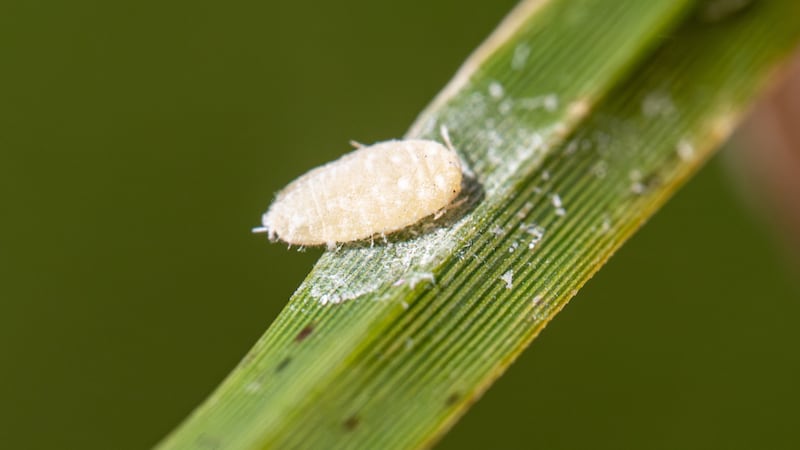
TEXAS (KAUZ) - High temperatures change how mealybugs feed, according to Texas A&M AgriLife experts, and that could help explain why recent pasture mealybug infestations have done far more damage than others this season.
In a Texas A&M AgriLife study, epidemiologists studied mealybug feeding behaviors under a range of environmental conditions to help ranchers more precisely manage the invasive pest that continues to spread across Texas and impact native and regionally adapted improved grasses.
To measure how mealybugs feed under different conditions, the AgriLife team uses a technique called electropenetrography, or EPG. They shared that the method attaches a sensor to the insect and the plant to record feeding activity as a waveform, which Chappell compares to reading an electrocardiogram.
AgriLife stated that intelligent agriculture systems could further hone how the data is processed as well as the accuracy and effectiveness of those forecasting tools.
The findings so far have shown that heat and environmental stress changes mealybug feeding behavior and could help explain why some infestations are more severe.
AgriLife experts said that by understanding factors that contribute to damaging infestations, the research teams are working to identify a suite of management tools and science-based recommendations that forage producers and ranchers can depend on to target the pest and its vulnerabilities.
According to Texas A&M AgriLife, the pasture mealybug was first confirmed in Texas in July 2025 and has since expanded to 114 counties across the state, according to Texas A&M AgriLife Extension Service entomologists.
It is a serious threat to the forage and grazing lands that support Texas’ $15.5 billion cattle industry and other pasture-based livestock operations.
More on the ties between heat, mealybug feeding and pasture damage can be read in Texas A&M AgriLife’s “Research ties heat to mealybug feeding and pasture damage” by Adam Russell.
Copyright 2026 KAUZ. All rights reserved.